
Introduction
The way businesses communicate with customers has changed significantly with the growth of digital platforms. People now use social media not only to connect with friends but also to discover brands, explore products, read reviews, and make purchasing decisions. This shift has created valuable opportunities for businesses of different sizes to reach potential customers online.
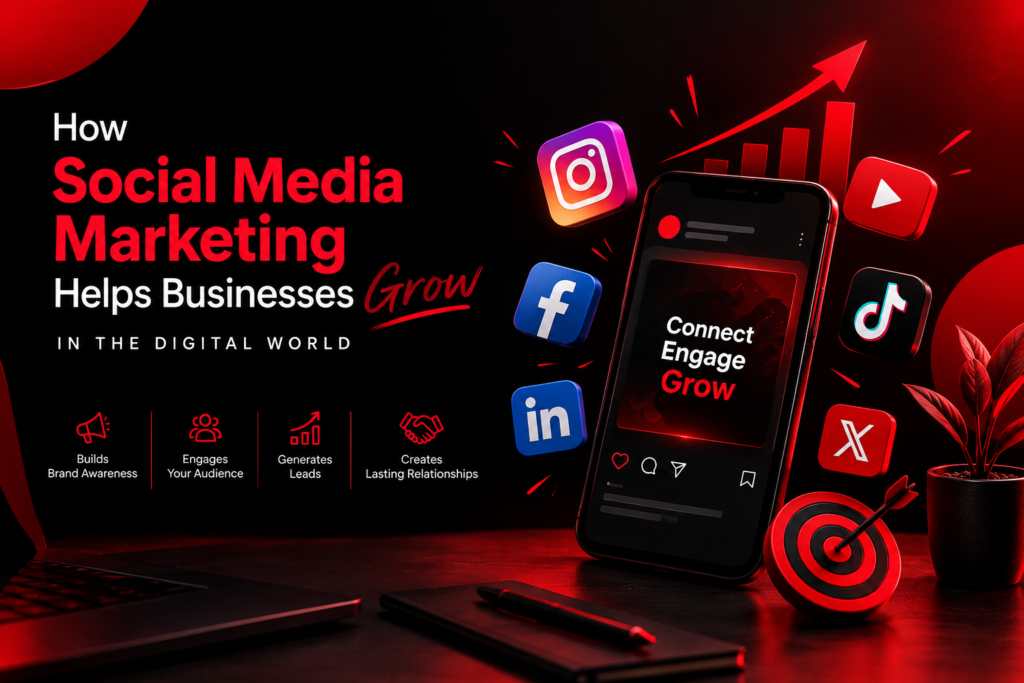
Social media marketing is the process of using social platforms to promote a brand, share information, build relationships, and achieve business objectives. When planned effectively, it can help businesses improve their online presence, understand their audience, and create meaningful connections that support long-term growth.
What Is Social Media Marketing?
Social media marketing involves creating, publishing, and managing content across platforms such as Instagram, Facebook, LinkedIn, YouTube, and other relevant networks. It can include organic posts, short-form videos, stories, live sessions, community engagement, influencer collaborations, and paid advertising campaigns.
The purpose is not simply to collect followers or receive likes. A successful social media marketing strategy connects a business with the right audience and encourages actions that support its goals.
For example, a local clothing store might use Instagram to showcase new collections, Facebook to share promotional offers, and short videos to demonstrate different styling ideas. By choosing suitable platforms and publishing relevant content, the business can introduce its products to potential customers and encourage them to visit its website or physical store.
Why Is Social Media Marketing Important?
1. Increases Brand Awareness
Brand awareness helps people recognize and remember a business. Social media gives brands opportunities to introduce their products, communicate their identity, and share their values with a wider audience.
Creative visuals, informative captions, and consistent branding can make a business more recognizable. When users find content interesting or useful, they may share it with others, helping the brand reach additional people.
However, visibility alone is not enough. Businesses should ensure that their content communicates a clear message and gives the audience a reason to pay attention.
2. Builds Strong Customer Relationships
Social media allows businesses to communicate directly with customers through comments, messages, polls, and interactive content. These conversations help brands understand customer preferences and respond to questions more effectively.
Responding politely to feedback and addressing concerns can make customers feel heard and valued. Over time, consistent communication can encourage loyalty and strengthen a brand’s reputation.
Businesses should remember that social media is a two-way communication channel. Listening to the audience is just as important as publishing promotional content.
3. Supports Website Traffic and Lead Generation
Social media can direct interested users to a business website, product page, blog, or contact form. Sharing useful information gives people a reason to explore a brand beyond its social profile.
For instance, a digital marketing agency could publish a short post explaining common SEO mistakes and invite readers to visit its website for a more detailed guide. This approach connects educational content with a relevant next step.
Clear calls to action, useful landing pages, and simple contact options can help turn social media interest into potential business opportunities.
4. Provides Valuable Audience Insights
Social media analytics help marketers understand how people interact with published content. Metrics such as reach, impressions, engagement rate, video views, link clicks, and conversions can reveal which topics attract attention.
These insights allow marketers to make informed decisions instead of relying entirely on assumptions. If educational videos receive more meaningful engagement than ordinary promotional posts, a business may choose to create more educational videos.
The most useful metrics depend on the campaign objective. For example, reach may be important for brand awareness, while qualified leads and conversions matter more when measuring sales performance.
The Role of Content in Social Media Marketing
Content is one of the most important elements of a successful social media strategy. Different formats serve different purposes, and businesses should select them according to their audience and marketing goals.
Educational carousels can explain useful concepts, short videos can demonstrate products, customer testimonials can provide social proof, and behind-the-scenes posts can make a brand feel more approachable.
Visual quality matters, but content also needs a clear message. A well-designed post that offers no meaningful information may receive little attention, while a simple post that solves a real problem can encourage stronger engagement.
Consistency is equally important. A realistic publishing schedule helps businesses maintain an active presence without sacrificing the quality of their content.
Organic Social Media vs Paid Advertising
Organic social media marketing focuses on building an audience and engaging users through regular content without paying for individual placements. It can help businesses establish their identity, share knowledge, and maintain relationships.
Paid social media advertising involves investing in campaigns to reach selected audiences. Depending on the platform, marketers may target people using factors such as location, interests, or previous interactions.
Both approaches can support business growth. Organic content helps develop a recognizable brand, while paid campaigns can increase targeted exposure and support specific objectives.
The right balance depends on the business’s budget, audience, competition, and goals. Paid advertising should also be monitored carefully to understand whether the results justify the investment.
How to Build an Effective Social Media Strategy
An effective strategy starts with a clearly defined objective. A business might aim to increase brand awareness, improve engagement, generate inquiries, or drive website visits.
Next, marketers should research the target audience and identify the platforms they use most often. Understanding audience interests makes it easier to develop relevant content ideas.
A content calendar can organize topics, publishing dates, formats, and campaign priorities. Businesses should also maintain consistent visual branding while adapting content to the style of each platform.
After publishing, marketers should review analytics and compare results with their original objectives. Testing different formats, messages, and publishing approaches can reveal opportunities for improvement.
Most importantly, businesses should remain flexible. Social media trends change frequently, so strategies should evolve based on audience behavior and measurable performance rather than following every trend without a clear purpose.
Conclusion
Social media marketing has become an important part of modern business communication. It offers opportunities to increase brand awareness, develop customer relationships, generate leads, and understand audience behavior.
However, sustainable results require more than frequent posting. Businesses need a clear strategy, relevant content, consistent communication, and regular performance analysis.
For digital marketers, the key is to combine creativity with measurable objectives. By understanding the audience and delivering content that provides genuine value, marketers can help businesses build a stronger online presence and create meaningful opportunities for growth.